Please note: this event has already taken place
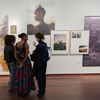
From 8 November to 7 December, Melkweg Expo presents new work developed during Class of Coco, our photography mentorship program for recent graduates and self-taught photographers.
Over the course of six months, participants have been given the space to deepen their practice and take the next step in their professional careers. Through collective learning, mentorship, and knowledge exchange, they have worked on storytelling, portfolio development, and positioning themselves as makers. This group exhibition presents the shared outcome of the program.
Guided by mentor Coco Olakunle, a Nigerian-Dutch, self-taught photographer based in Amsterdam, the participants have collaborated closely throughout the program. In her practice, Coco celebrates the beauty and diversity of young people in subcultures across the world, working at the intersection of documentary and fashion photography.
Participating photographers:
Ajiri Ogbovoh
Asmaa El Moudden
Brunei Deneumostier
Hanna ‘t Sas
Studio Hans
Inya Tennyson
Joaquìn Rooze
Wiaem el Bahri
Yasemin Demirözcan
This programme is made possible in part by the Mondriaan Fund, Amsterdam Fund for the Arts, Pictoright Fund, and Rabo ClubSupport.
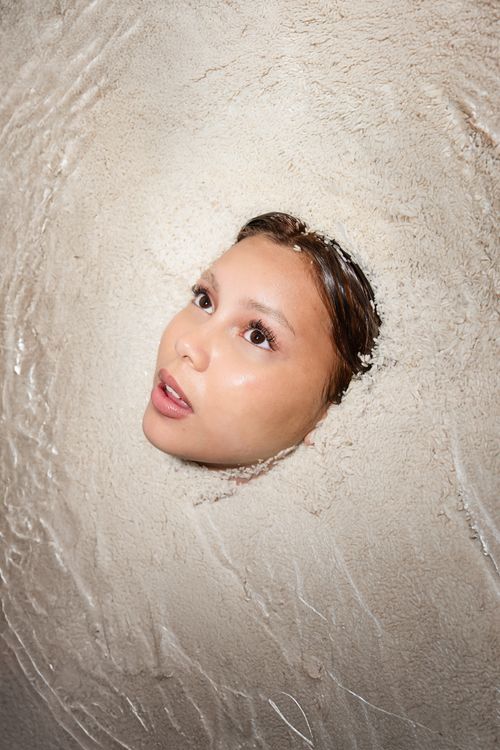
Joaquín Rooze
When you grow up between two worlds it often means learning to balance. Joaquín was born in Holland, but his roots stretch far away, to a place he has never truly known. He does not speak the language and can not cook the dishes that his ancestors made. Therefore, he wondered what really connected him to his culture.
Joaquín did not find the answer in something grand but in a small gesture that is part of everyday life, washing rice. A simple gesture, carried out by generations before him, often without thought to its origin. A ritual that was thought to him by his mother, who learned it from her mother, continuing through generations. It’s more than rice. It is a quiet reminder of who we are, of where we come from, even when we sometimes forget.
Joaquín Rooze is a queer creative with Javanese-Surinamese roots, working across photography, art direction, and graphic design. His work challenges clichés and explores versatility, creating images that captivate and gently push against the norm. He invites viewers to see a world that often remains unseen.
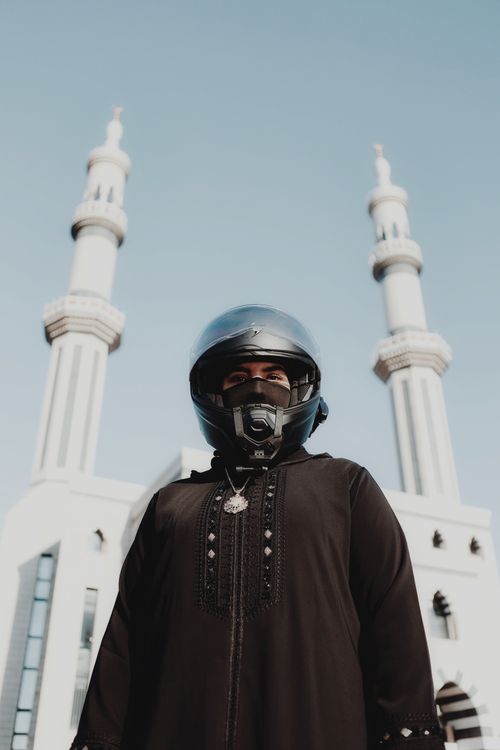
Yasemin Demirözcan
In public discourse and visual culture, Muslim women have often been reduced to symbols of faith, oppression, or emancipation. These steroetypes, repeated both outside and within the community, flatten the lived realities of those they claim to represent.
This ongoing series seeks to move beyond such limitations. Through portraiture, it explores how Muslim women express who they are on their own terms, through faith, clothing, and self-presentation. The work speaks to resilience through the quiet strength of those who live beyond imposed narratives. It calls for a way of seeing rooted in honesty, empathy, and care. As ‘We Are Seen, As We See’ imagines photography as a shared space where difference can be witnessed without judgement, and where visibility itself becomes a form of understanding.
Yasemin Demirözcan is a self-taught photographer with a background in sociology and visual anthropology. Her work explores the tensions and translations of diasporic experience, highlighting marginalized perspectives.
Brunei Deneumostier
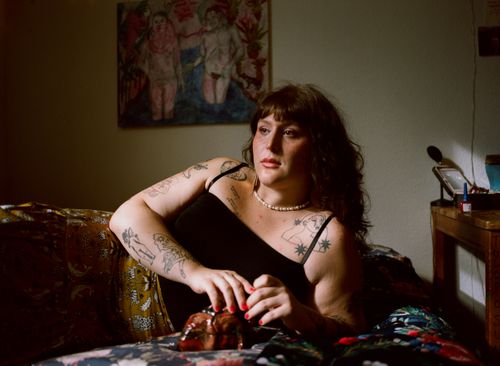
‘No soy de aquí, ni soy de allá’ (I’m not from here, nor from there) explores life between worlds. The ongoing photography series investigates Latin American diasporas and the tension between embracing and deconstructing culture through a queer lens. It offers an intimate look at queer Latine individuals reshaping identity, community, and belonging far from their places of origin.
Through portraits and storytelling, the series amplifies the voices of those who exist between cultures, belonging nowhere entirely. Images of nature, particularly rose-ringed parakeets thriving far from their native habitat, act as a metaphor for adaptation and resilience. Both human and natural narratives build an ongoing visual archive of queer Latines in diaspora, revealing tenderness, defiance, and reinvention, while honouring belonging in the in-between.
Brunei Deneumostier is a Peruvian-Brazilian artist and visual storyteller based in Amsterdam. Drawing from her transcontinental background, she explores themes of belonging, decoloniality, queer visibility, and cultural reclamation.
Asmaa El Moudden
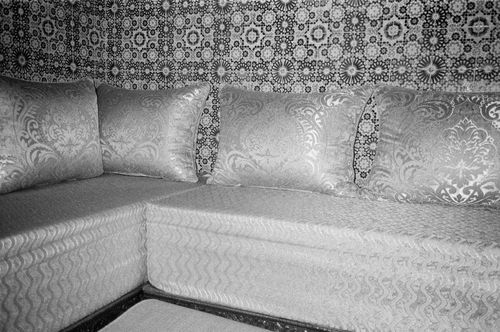
‘Where I First Cried’ emerged during a period of personal transformation, in which Asmaa began to re-examine her boundaries, patterns, and sense of identity. The series explores the duality of the two worlds she moves between: her Moroccan heritage and her life in the Netherlands. It is a visual and personal exploration of coming home to oneself, rooted in the past, and oriented toward healing in the future.
With an intuitive approach, Asmaa captures objects, environments, and quiet moments that serve as mirrors. In doing so, she processes grief and loss, while also working toward healing her inner child. The images shift between presence and absence, between what is visible and all that remains unspoken.
Asmaa El Moudden is a Moroccan autodidact photographer, born in the Netherlands. Her work explores connection, meaning, and the transformations of identity amid life’s rough edges. Shaped by her heritage and background, she has cultivated an attentive way of seeing people, places and their stories.
Hanna ’t Sas
With the multimedia installation ‘In de Stilte Tussen Ons’, Hanna ’t Sas explores the invisible layers of trauma, shame, and healing. Through an intimate dialogue between image, sound, and text, a space emerges in which silence becomes tangible. The work interweaves autobiographical fragments with universal feelings of loss and resilience.
By combining personal notes, projections, and photography, ’t Sas invites the audience to pause and reflect on what often remains unspoken. ‘In de Stilte Tussen Ons’ is both a process of mourning and a rediscovery of inner strength.
Hanna ’t Sas is a visual artist and photographer. She graduated from the Fotoacademie in 2024. In her work, she explores themes of connection, visibility, and the act of claiming space. Her installations arise from a desire to share personal stories and to transform vulnerability into strength.
Ajiri Ogbovoh
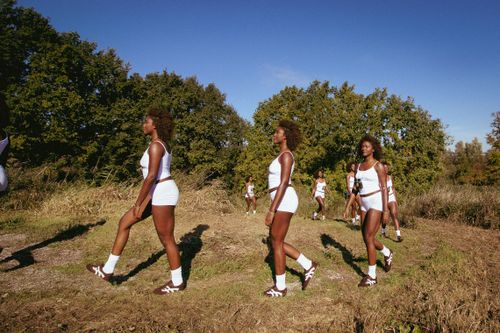
‘Lost & Found’ highlights the uncertainty that can arise when you are in search of yourself. For Ajiri, self-discovery has no final destination. Every time you are convinced that you have found yourself, a new version emerges. The search repeats itself like an echo. Whoever seeks, finds themselves again and again. The photo series reflects on the feeling of getting lost and finding your way back.
Ajiri Ogbovoh is a Dutch-Nigerian photographer whose work explores and challenges inequality, prejudice, and societal expectations. Her imagery celebrates authenticity and differences, aiming to move and inspire viewers to embrace themselves and others fully, without judgment.
Wiaem el Bahri
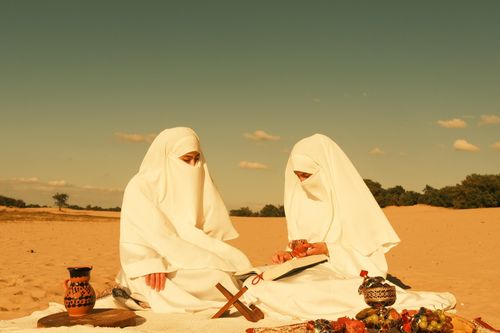
The photo series ‘Fruits of Jannah’ revolves around the fruit trees mentioned in the Quran as the fruits of paradise. Olives, figs, bananas, pomegranates, and dates are deeply intertwined within Middle Eastern and Northern African cultures, both through their religious significance and their abundance in the region. They symbolize the connection between heaven and earth, between the temporal and the eternal.
For Wiaem, the photo series is a form of devotion, capturing and reflecting on their beauty that is found in the everyday. Fruits that grow underneath the same sun and breathe the same air. ‘Fruits of Jannah’ is an ode to the creation, to that which is meant for the earth and for al-Jannah, paradise.
Wiaem el Bahri is a self-taught photographer from Rotterdam. Inspired by her Moroccan and Islamic background, she captures stories of identity, memory, and the diaspora in the Netherlands. Through her work, she aims to celebrate the richness and diversity of her community and inspire others.
Inya Tennyson
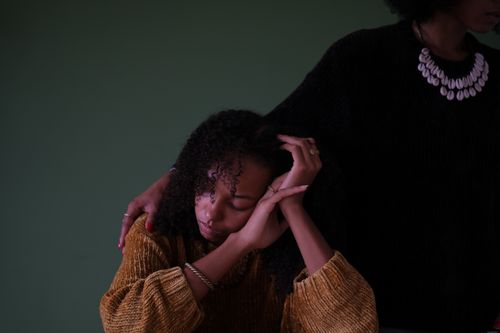
What is it like to love someone whose head drifts in the clouds one moment, yet sinks into the deep the next? Absent at times, usually unpredictable. The complex result is both wanting and fearing a connection at the same time. EBB & OVERFLOW portrays the dis/connection between people who struggle with personality disorders, psychosis and alcoholism, and their loved ones who experience them in their different states.
Growing up with a mother and grandmother with bipolar disorder, without being informed of their diagnosis, confused and scared Inya. Constantly trying to predict someone’s behaviour for the sake of safety influences the way you look at the world: with a keen eye for detail through a lens of distrust– a mixed blessing.
Inya Tennyson, alias Lonerita is a multidisciplinary artist from Belgium and Ghana, based in Amsterdam. Through visual art and writing she explores biracial identity, mental health, and the beauty of the everyday.
Studio Hans
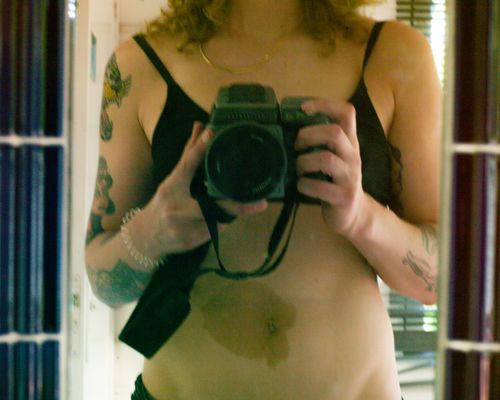
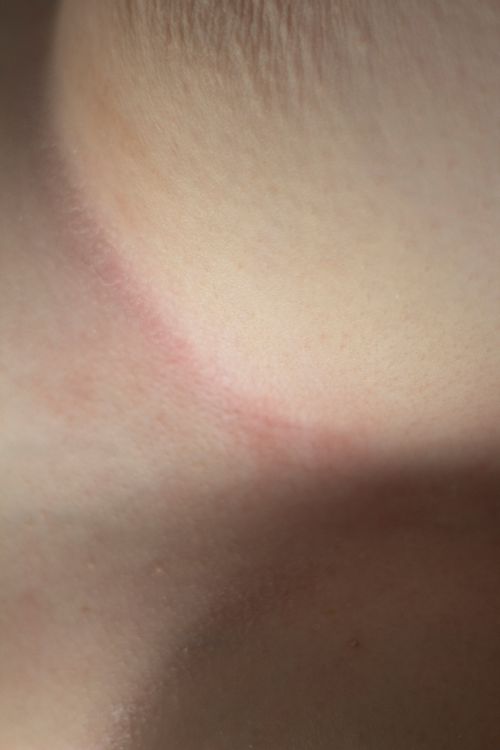
With this installation, Studio Hans explores the love-hate relationship with her breasts, with which she has never felt connected. ‘Hannah’ serves as a mirror in the period leading up to her drastic breast reduction. It reveals her process, distance, and discomfort, but also speaks to reclaiming agency over her own body.
Hannah Pater, known as Studio Hans, creates photographic art with a feminist and activist focus. Her work explores women, bodies, and imperfection, capturing social, political, and personal questions through composition and mise-en-scène. As a self-taught photographer with a theater background, she combines both disciplines to produce powerful and meaningful imagery.